

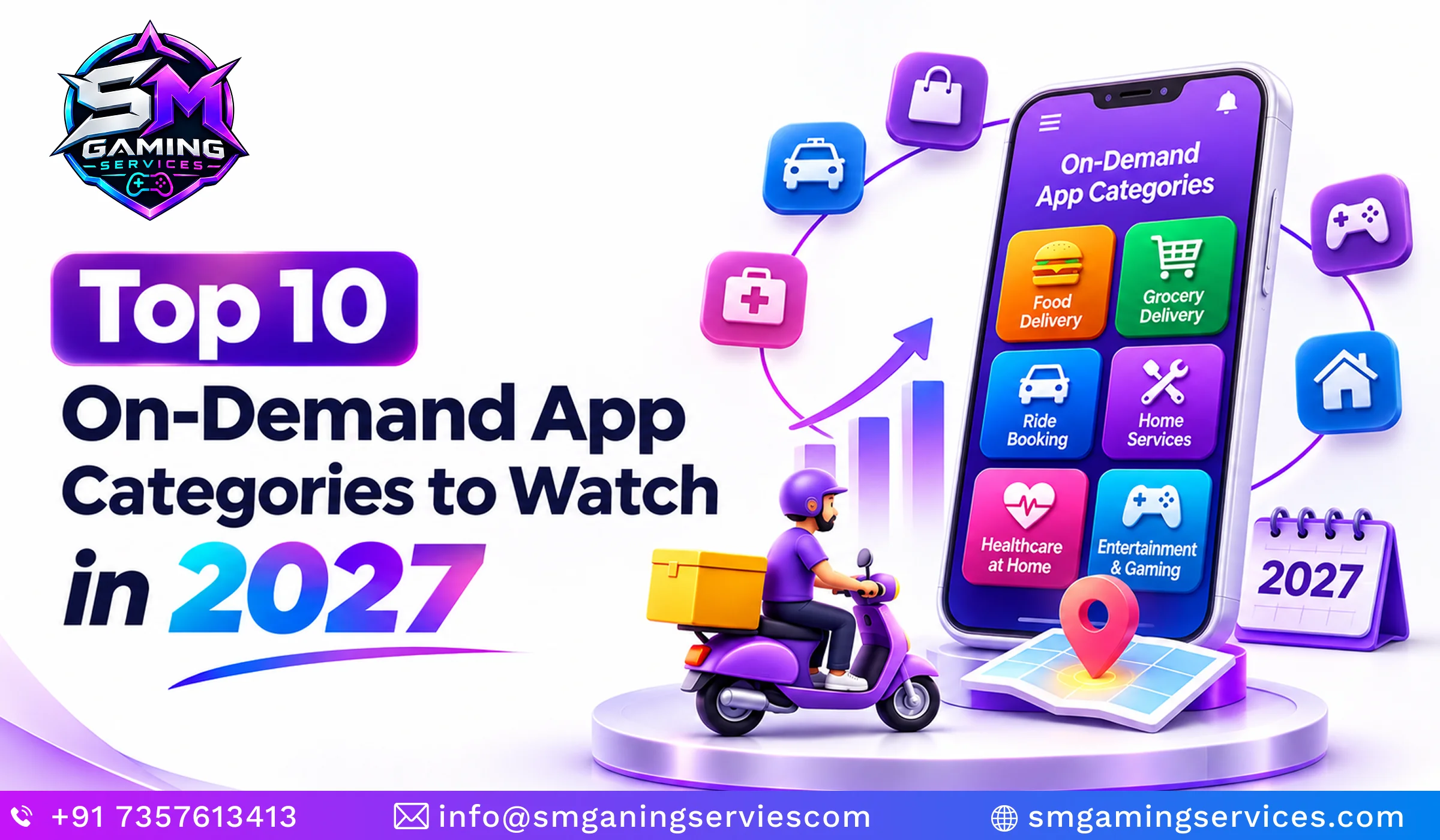
On-demand apps connect customers with products or services when they need them, either immediately or through a scheduled booking. They bring discovery, availability, payment, and service updates into one experience. For entrepreneurs, the opportunity lies in solving a specific problem: getting groceries delivered, finding a dependable technician, booking transport, or arranging care without making several calls. Understanding on-demand app categories helps businesses match that problem with a workable delivery model before investing in technology.
Looking toward 2027, food delivery, grocery delivery, ride-hailing, home services, healthcare access, courier delivery, beauty services, laundry, pet care, and vehicle maintenance deserve consideration. This article examines these categories through customer needs, repeat usage, provider availability, and operational feasibility. It also explains features, monetization options, and common challenges. These are categories to watch, rather than a verified ranking of future market leaders. The strongest starting point is a service you can deliver reliably in a defined location, supported by customers willing to pay for convenience, quality, and a better experience over existing alternatives available to them.
What Are On-Demand Apps, and Why Watch These Categories?
On-demand apps are digital platforms that connect a customer request with currently available goods, transport, or professional services. Some fulfill requests quickly; others organize appointments for later. Different types of on-demand apps therefore require different operations, pricing, and customer expectations. This shortlist prioritizes recognizable customer problems, potential repeat usage, and practical fulfillment requirements. Published platform results provide context for delivery and mobility demand, while the remaining categories represent service models worth testing locally. Inclusion does not establish market leadership, future growth, or profitability for a new business entering any category.
Quick answer: The ten on-demand app categories to watch in 2027 are food delivery, grocery delivery, ride-hailing, home services, healthcare access, courier delivery, beauty services, laundry, pet care, and vehicle maintenance. Choose between them by testing local demand, provider availability, repeat usage, and the cost of completing each booking.
Market evidence: DoorDash reported approximately 3.2 billion total orders in 2025, up 23% from 2024. Uber reported 13.567 billion trips in 2025, up 20%; its platform-wide trips metric includes mobility rides and delivery orders. These figures show activity on established platforms, not the addressable market or likely results for a startup. [1][2]
Key takeaways
- Start with a customer problem and a defined service area.
- Distinguish immediate fulfillment from scheduled appointments.
- Match the app workflow to the category’s operational needs.
- Calculate revenue after provider payments, support, and refunds.
- Treat 2027 predictions as planning assumptions.
- Validate repeat purchases before expanding.
1. Food Delivery Apps
Food delivery apps connect customers with restaurants and delivery partners for prepared meals. Their target audiences include busy professionals, students, families, and workplaces arranging group orders. Common services cover restaurant discovery, takeaway ordering, scheduled delivery, and order tracking. Revenue can come from restaurant commissions, delivery charges, memberships, and sponsored listings. However, restaurant preparation delays, incorrect orders, and expensive delivery routes can weaken the experience. For startups exploring on-demand apps in 2027, a focused neighborhood, cuisine segment, or workplace delivery service offers a clearer test than launching across an entire city.
What Should a Food Delivery MVP Include?
A food delivery MVP should make ordering and fulfillment dependable before introducing recommendations. Customers need accurate menus, visible charges, and realistic delivery estimates. Restaurants need a simple way to accept orders and update preparation times. Delivery partners need pickup details and clear destinations. Track missed items and late deliveries to identify whether problems originate in software, restaurant operations, or dispatch.
- Customer tools: menu filters, order customization, payment, and support.
- Provider tools: order acceptance, preparation updates, and delivery assignment.
- Key metric: contribution per completed order after variable expenses.
2. Grocery Delivery Apps
Grocery delivery apps help households and small businesses purchase everyday essentials without visiting a store. Orders may include fresh produce, packaged foods, cleaning products, and personal care items. Customers value product availability, reliable substitutions, and delivery windows that fit their routines. Revenue options include delivery fees, retailer commissions, memberships, and disclosed promotional placements. Operational challenges differ from restaurant delivery because picking accuracy, changing inventory, freshness, and product weights affect the final basket. A startup should first decide whether it will partner with retailers or operate its own inventory and facilities.
How Can Grocery Apps Build Repeat Usage?
Repeat usage depends on customers receiving the right products in acceptable condition. Saved shopping lists and reorder buttons help, but inventory accuracy matters more than additional screens. Let customers approve substitutions, specify preferences, and understand changes to their bill. Begin with a manageable catalog and delivery radius so the team can measure picking time, stock discrepancies, and fulfillment costs accurately.
- Core features: stock status, substitution approval, and scheduled slots.
- Service options: weekly essentials, office supplies, or neighborhood groceries.
- Key challenge: balancing delivery convenience with basket economics.
3. Ride-Hailing Apps
Ride-hailing apps match passengers with available drivers for local journeys or scheduled pickups. Potential audiences include commuters, travelers, corporate teams, and people underserved by existing transport options. Core services involve location search, fare estimates, trip booking, and journey updates. Platforms may earn booking commissions, service fees, or business account revenue. Driver availability, cancellations, pickup accuracy, and passenger trust shape performance. Before pursuing this category, businesses need a realistic understanding of local operating requirements and transport capacity. A narrow use case, such as scheduled employee transport, can simplify the initial proposition.
Which Ride-Hailing Features Matter Most?
Ride-hailing customers need confidence that the correct vehicle will arrive at the correct location. Clear pickup instructions, driver identification, trip sharing, and accessible support should receive early attention. Drivers need reliable request notifications and straightforward earnings information. Test matching and cancellation workflows under limited supply, because an attractive interface cannot compensate for repeated unfulfilled requests during busy local travel periods.
- Customer tools: pickup confirmation, fare visibility, and trip updates.
- Driver tools: availability settings, navigation handoff, and payout summaries.
- Key metric: completed journeys as a share of requested trips.
4. Home Service Apps
Home service apps connect households, landlords, and property managers with professionals for cleaning, plumbing, electrical work, appliance repairs, and related tasks. These bookings often involve appointments rather than immediate arrival. Customers need clear service scope, dependable scheduling, and confidence in the assigned professional. Revenue may include booking commissions, provider subscriptions, or maintenance plans. Challenges include inconsistent workmanship, inaccurate estimates, missed appointments, and disputes about additional work. Businesses with existing local service networks may find this category easier to validate because provider recruitment and service supervision already form part of operations.
How Can Home Service Apps Establish Trust?
Trust begins before the professional arrives. Describe what each service includes, explain potential additional charges, and show relevant provider experience. Introduce documented onboarding and a clear process for resolving poor service. Let customers upload photos when requesting estimates. This reduces uncertainty for both sides and helps dispatchers assign suitable professionals with the right tools for the work requested that day.
- Core features: service checklists, photo uploads, and appointment reminders.
- Provider tools: job details, availability, and completion records.
- Key challenge: maintaining consistent quality across independent professionals.
5. On-Demand Healthcare Apps
On-demand healthcare apps help people find clinicians, arrange appointments, and access remote consultations where appropriate and permitted. Target customers may include working adults, caregivers, and people seeking easier access to routine services. Depending on scope, revenue can come from booking arrangements, provider software subscriptions, or organizational partnerships. These products need careful planning around professional oversight, sensitive information, and service boundaries. Their suitability depends on the specific care model and location. Entrepreneurs should distinguish administrative convenience from clinical decision making and avoid presenting routine appointment platforms as substitutes for emergency care.
What Should Healthcare App Planning Prioritize?
Start with a clearly defined service boundary and qualified clinical partners. Appointment scheduling requires different workflows from consultations or ongoing monitoring. Explain who provides care, what information is collected, and how users can obtain assistance. Build access controls and consent processes around the actual service. Have appropriate specialists review clinical, privacy, and local operating requirements before committing to development scope.
- Core features: clinician profiles, availability, booking, and secure communications.
- Operational priority: clear ownership of patient support and follow-up.
- Key challenge: coordinating convenience with clinical responsibility.
6. Courier and Parcel Delivery Apps
Courier apps help individuals, retailers, and local businesses arrange pickups and deliveries. Common services include document transport, store deliveries, returns, and scheduled business collections. Customers want predictable pickup windows, package visibility, and evidence that the recipient received the item. Revenue models include per-delivery fees, distance-based charges, and recurring business contracts. Operational complexity comes from routing, failed delivery attempts, damaged packages, and uneven demand. A startup can narrow the model around a specific merchant segment, delivery zone, or recurring route before supporting a broader mix of parcel sizes and delivery needs.
How Can Courier Apps Improve Delivery Accountability?
Each package needs a traceable handoff from sender to courier to recipient. Capture pickup confirmation, delivery status, and suitable proof of delivery while minimizing unnecessary personal information. Explain what happens when nobody is available to receive an item. For business customers, provide consolidated billing and delivery records so the platform reduces administrative work as well as coordinating transport between locations.
- Core features: pickup scheduling, tracking, delivery proof, and exception alerts.
- Business tools: bulk bookings, recurring collections, and account billing.
- Key metric: successful deliveries per route after failed attempts.
7. Beauty and Salon Booking Apps
Beauty and salon booking apps organize appointments for grooming, styling, and personal care, either at a salon or at home. Their audiences include professionals, event customers, and people seeking convenient recurring appointments. Services may cover haircuts, makeup, grooming, and other treatments offered by suitable providers. Monetization options include booking commissions, salon software subscriptions, and service packages. Challenges involve professional availability, appointment duration, equipment, and customer expectations. A clearly defined service menu helps avoid mismatched bookings. Businesses should also decide whether their platform manages service delivery or simply facilitates appointment discovery.
Which Features Support Better Beauty App Bookings?
Customers need enough information to choose the right service and professional. Show portfolios, service duration, preparation instructions, and complete pricing where possible. Providers need time buffers for travel, setup, and cleanup. Make rescheduling rules visible before payment. Start with services that can be described consistently, then use customer feedback to improve appointment estimates and reduce preventable misunderstandings about expected results.
- Core features: portfolios, service menus, appointment slots, and reminders.
- Retention tools: preferred professionals and repeat appointment booking.
- Key challenge: aligning service expectations with available professional skills.
8. Laundry and Dry-Cleaning Apps
Laundry and dry-cleaning apps coordinate collection, garment processing, and return delivery for households and businesses. Potential customers include students, working professionals, residential communities, and small hospitality operators. Services can range from wash-and-fold orders to ironing and specialist cleaning. Platforms may charge by weight, item, order, or recurring plan. Unlike simple delivery businesses, they depend on processing capacity and garment handling quality. Lost items, unclear pricing, and delayed returns can quickly damage trust. A local pilot should test collection density, partner reliability, and realistic turnaround times before adding faster delivery promises.
How Can Laundry Apps Reduce Customer Complaints?
Create a clear record of what was collected and what service the customer requested. Item counts, garment notes, order labels, and status updates help teams trace mistakes. Explain which items require specialist assessment and when the price may change. Offer practical delivery windows based on processing capacity, then monitor complaints to identify recurring issues with handling, cleaning, or return logistics.
- Core features: pickup slots, order labels, item records, and status tracking.
- Revenue options: per-item charges, weight-based pricing, and recurring plans.
- Key metric: repeat orders alongside loss, damage, and rework rates.
9. Pet Care Apps
Pet care apps connect owners with walkers, sitters, groomers, and other suitable service providers. Their audiences include working households, frequent travelers, and people needing care support. Common services involve scheduled walks, home visits, grooming appointments, and sitting bookings. Revenue may come from completed-booking commissions, provider subscriptions, or recurring care packages. Trust is central because customers are handing responsibility for an animal to another person. Provider experience, pet compatibility, communication, and incident handling deserve more attention than marketplace size. A focused service area can support closer provider oversight during early operations.
What Makes a Pet Care App More Useful?
Collect practical information about each animal, including routines, handling preferences, and relevant owner instructions. Match providers by suitability and availability rather than proximity alone. Support introductory meetings where appropriate, and provide visit updates that explain what happened. Define incident escalation clearly. A dependable booking history and consistent caregivers can help owners make informed choices for later appointments and recurring care.
- Core features: pet profiles, caregiver experience, scheduling, and visit reports.
- Service options: recurring walks, home visits, grooming, and sitting.
- Key challenge: maintaining suitable matches and dependable caregiver conduct.
10. Car Repair and Maintenance Apps
Car repair and maintenance apps help vehicle owners book inspections, routine servicing, cleaning, or selected repairs. Customers may include individual drivers, residential communities, and businesses managing small fleets. Services can happen at a workshop or at the customer’s location when equipment and conditions permit. Revenue options include booking commissions, service margins, maintenance packages, and fleet contracts. The main challenges are diagnostic uncertainty, spare-parts availability, technician capability, and explaining additional work. Starting with standardized maintenance tasks can make estimates easier to understand and help a new platform establish reliable service processes.
How Can Vehicle Service Apps Improve Pricing Clarity?
Separate the initial inspection or diagnostic charge from the cost of approved repairs. Ask for vehicle details and symptoms before assigning a technician. Show a revised estimate when new work becomes necessary, and obtain customer approval before proceeding. Keep service records accessible afterward. This workflow reduces surprises and gives customers a useful reference when planning their next maintenance appointment locally.
- Core features: vehicle profiles, estimates, approval requests, and service history.
- Business tools: fleet scheduling, reminders, and consolidated invoices.
- Key challenge: coordinating technicians, parts, and accurate service expectations.
Comparison of On-Demand App Categories
Comparing on-demand app categories is easier when customer needs and fulfillment requirements appear together. The table below presents typical monetization options and relative operational complexity for a small local launch. These are editorial assessments, not measured industry scores or forecasts of returns. Complexity changes with geography, service scope, provider arrangements, and the promises made to customers. A scheduled appointment marketplace may operate differently from a platform employing professionals directly. Use this comparison to shortlist ideas, then replace broad assumptions with interviews, provider quotes, and evidence from your intended launch area.
| Category | Customer need | Monetization approach | Operational complexity |
|---|---|---|---|
| Food delivery | Convenient prepared meals | Commission, delivery fees, membership | High: restaurant and courier coordination |
| Grocery delivery | Household essentials | Delivery fees, retailer commission, membership | High: inventory, picking, and freshness |
| Ride-hailing | Dependable transport | Trip commission, booking fees, business accounts | High: driver supply and trip support |
| Home services | Reliable household help | Booking commission, subscriptions, plans | Medium–high: skills and workmanship |
| Healthcare access | Easier care booking | Provider software fees or booking arrangements | High: clinical partners and sensitive data |
| Courier delivery | Local package transport | Delivery charges, recurring contracts | Medium–high: routing and failed handoffs |
| Beauty booking | Convenient appointments | Commission, software subscription, packages | Medium: scheduling and service consistency |
| Laundry | Garment collection and cleaning | Item or weight charges, recurring plans | Medium–high: processing and item handling |
| Pet care | Trusted animal care | Commission, recurring care packages | Medium–high: suitability and oversight |
| Vehicle maintenance | Convenient servicing | Service margins, packages, fleet contracts | High: diagnosis, technicians, and parts |
What Features Should an On-Demand App Include?
An on-demand app should include discovery, availability, clear pricing, booking, payments, service updates, and support. Beyond these foundations, features should reflect the category rather than follow a universal checklist. A grocery platform needs substitutions, while a repair app needs estimate approval. Most businesses also need provider workflows and administrative controls, even when these begin as simple web interfaces. When evaluating On-Demand App Development Services, ask how the proposed system handles cancellations, unavailable providers, refunds, and failed payments. These exceptions often reveal operational weaknesses before customer demand exposes them at scale.
How Should Businesses Scope the First Release?
Map one complete customer journey and the corresponding provider actions. Include the administrative steps required when something goes wrong. Then prioritize features that make that journey usable and measurable. Mobile App Development Services should support this operational scope with appropriate testing and maintainable implementation. Add personalization or automation only after the team understands actual booking behavior and recurring support problems.
- Customer essentials: search, pricing, booking, payment, and help.
- Provider essentials: availability, requests, task updates, and earnings.
- Admin essentials: user management, disputes, refunds, and performance reporting.
- Measurement essentials: completion, repeat usage, cancellations, and contribution.
Which On-Demand App Trends Could Influence 2027?
Potential on-demand app trends for 2027 include more useful automation, clearer scheduling, repeat-booking tools, and stronger operational visibility. These are planning hypotheses, not established outcomes. DoorDash’s 2025 results described improved retention and order frequency in grocery and retail following improvements in selection and quality. That supports examining service fundamentals alongside new technology. Businesses researching On-Demand App Trends should ask which change removes a demonstrated customer problem. Faster fulfillment, artificial intelligence, or wider coverage adds value only when the underlying service remains dependable, affordable, and manageable for the delivery team involved.
Where Could Automation Add Practical Value?
Automation can help organize support requests, suggest relevant services, or highlight scheduling conflicts. Its usefulness depends on reliable input data and clear escalation paths. Test each application against a measurable task, such as reducing booking corrections or identifying delayed jobs. Keep human review where decisions affect service suitability, disputes, or sensitive information. Forecast benefits cautiously until a pilot demonstrates results.
- Repeat usage: saved preferences, recurring appointments, and easy reordering.
- Service visibility: accurate availability, realistic windows, and exception alerts.
- Automation: narrowly defined tasks with measurable results.
- Trust: clearer prices, provider information, and responsive support.
Evidence versus forecast: DoorDash’s selection-and-quality observation is reported historical evidence. The proposed 2027 priorities above are editorial interpretations for planning, not claims that every category will adopt them. [1]
How Can Startups Choose an On-Demand App Business Idea?
Startups should choose an on-demand app business idea by matching validated demand with delivery capability and a realistic budget. Begin with customer interviews and provider discussions in one location. Estimate the cost of completing a booking, including payouts, payment fees, support, refunds, and incentives. Compare this with revenue customers will actually accept. Searching for a trending On-Demand App can inspire research, but popularity alone does not establish business fit. Stronger on-demand business opportunities emerge when founders understand the service, can recruit dependable providers, and have evidence of repeat customer need.
A Practical Framework for Comparing Startup Ideas
Score each idea against local demand, founder expertise, provider access, available budget, and fulfillment difficulty. Record the evidence behind each score rather than relying on enthusiasm. Run a small paid pilot before building extensive software. Compare repeat bookings and completed-service economics across shortlisted ideas. Choose the model that demonstrates a workable service promise within the resources your team actually controls.
- Demand: will customers pay, and how often?
- Expertise: can your team assess service quality?
- Supply: are suitable providers available when customers need them?
- Budget: can funding cover software and operations through validation?
- Delivery: can the team fulfill, support, and resolve each booking?
Final Thoughts
The most useful on-demand app ideas for startups connect a recurring customer need with a service the team can deliver consistently. Compare local demand, available providers, founder expertise, development scope, and operating costs before selecting a category. Use the ten models in this guide to structure research, not predict guaranteed returns. sm gaming services can be considered when discussing your on-demand app development requirements and the workflows your product needs. To turn a validated service concept into a practical development brief, define your launch market and contact us today for discussion.
Ready to turn your on-demand app idea into a practical business solution? Coherent Lab helps you plan essential features, simplify booking workflows, and develop apps around customer needs. Discuss your goals, explore development options, and contact us today to begin.
Frequently Asked Questions
Which on-demand app category is best for startups?
The best category depends on the startup’s expertise, customer access, provider network, and budget. A founder with dependable local technicians may be better positioned for home services than food delivery. Compare actual demand and fulfillment costs in a small launch area. Favor the category where your team can deliver consistent quality and earn repeat bookings without depending on continuous discounts.
How do on-demand apps make money?
On-demand apps can earn money through booking commissions, delivery charges, service fees, memberships, provider subscriptions, or business contracts. Some also sell clearly identified promotional placements. The right mix depends on the category and who receives measurable value. Revenue alone does not show viability; subtract provider payments and other variable costs to understand what each completed booking contributes toward operating expenses.
How much does on-demand app development cost?
Development cost depends on the service model, number of user roles, supported platforms, integrations, and operational workflows. A simple booking product differs substantially from a system coordinating live dispatch, inventory, and payouts. Prepare a scoped brief and request itemized estimates. Budget separately for provider onboarding, customer support, ongoing maintenance, and the operational work required after the software is initially launched.
Should an on-demand app offer immediate or scheduled service?
Choose immediate service only when local supply and dispatch capability can support the promise consistently. Scheduled bookings may suit cleaning, grooming, maintenance, and other services requiring preparation or specialist availability. Some businesses can offer both, with different pricing and service windows. Test what customers actually need before adding urgency that increases provider pressure, cancellation risk, or the cost of fulfillment.




3 Comments
[…] services, ask Hyperlink InfoSystem to demonstrate provider scheduling and appointment changes. Use On-Demand App Categories to identify the fulfillment model before requesting proposals. If a trending On-Demand App inspires […]
[…] you are researching a trending On-Demand App idea, compare On-Demand App Categories by how customers buy each service. Cleaning can fit packages or hourly visits, while custom repairs […]
[…] may need provider availability, an arrival window, and a price adjustment after inspection. Our On-Demand App Categories guide compares business models, while On-Demand App Trends covers product ideas and features to […]